Prader–Willi Syndrome (PWS) is a complex genetic condition caused by abnormalities in
chromosome 15, leading to low muscle tone (hypotonia), growth hormone deficiency, and
unique metabolic and behavioral challenges. While most discussions focus on appetite and
endocrine issues, one of the most significant musculoskeletal complications is scoliosis, spinal
curvature that can progress rapidly during growth.
Scoliosis in PWS can appear as early as infancy and may continue to worsen through
adolescence and adulthood. The combination of muscle weakness, ligamentous laxity, and
growth hormone therapy contributes to spinal imbalance and curve progression.
At the Paley Orthopedic & Spine Institute, Dr. Arun Hariharan takes a multidisciplinary
approach to spine care in PWS; balancing surgical precision with medical, anesthetic, and
rehabilitation safety.
Why Scoliosis Develops in PWS
The causes of scoliosis in PWS are multifactorial:
- Low muscle tone (hypotonia) reduces spinal support and stability.
- Ligamentous laxity allows gradual curvature even under normal forces.
- Abnormal growth and body composition alter mechanical loading.
- Hormonal and nutritional factors (including growth hormone deficiency and obesity)
impact bone health and recovery.
Because PWS scoliosis combines features of neuromuscular and idiopathic curves, careful
individualized management is essential.
Evaluation and Diagnosis
Comprehensive assessment includes:
- Physical exam focusing on posture, flexibility, and strength.
- EOS imaging for full-body alignment and curve measurement with minimal radiation.
- Sleep studies and pulmonary evaluation before surgery, since respiratory function can
be compromised. - Nutritional and endocrine evaluation, especially in children on growth hormone
therapy.
Routine spine screening should begin in early childhood; even mild curves can progress
quickly in this population.
Non-Surgical Management
For flexible curves and younger patients:
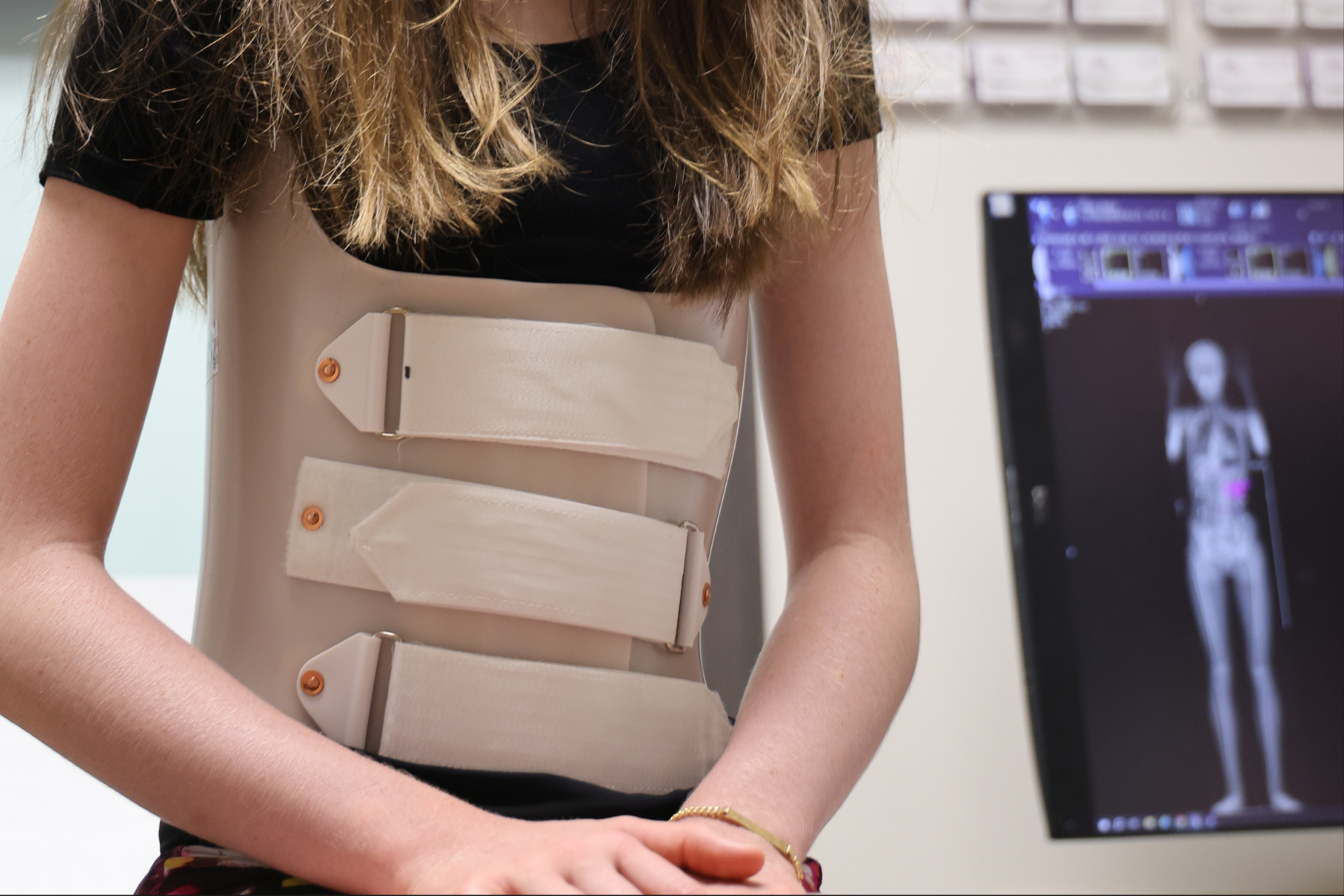
- Bracing can help slow progression, though compliance may vary.
- Physical therapy to improve posture and trunk strength.
- Close monitoring every 6 months during growth.
When bracing fails or curves exceed 45–50 degrees, surgery is considered to prevent further
deformity, imbalance, and respiratory compromise.
Surgical Management
Surgery in children with PWS requires meticulous planning due to potential challenges such as
low muscle mass, high body fat, temperature dysregulation, and delayed wound healing.
Dr. Hariharan’s surgical approach includes:
- Posterior spinal fusion with segmental instrumentation, using advanced navigation
and neuromonitoring. - Meticulous wound closure and infection prevention given the soft-tissue fragility
common in PWS. - Collaboration with anesthesiology and endocrinology teams to manage temperature,
glucose, and airway safely.
The goal is a balanced, stable spine that supports comfort, sitting, and ambulation; not just
cosmetic correction.
Postoperative Care and Outcomes
Recovery focuses on careful wound monitoring, nutrition optimization, and early mobilization.
Most patients experience:
- Improved posture and balance.
- Easier breathing and sitting tolerance.
- Reduced back pain and fatigue.
At the Paley Institute, long-term outcomes are excellent when surgery is combined with
continued therapy, growth management, and nutritional follow-up.
Dr. Hariharan’s Perspective
“Children with Prader–Willi Syndrome are some of the most resilient patients I treat. The key is
to approach every spine with precision and patience; understanding that surgical correction is
only one part of their lifelong care plan.”
— Dr. Arun Hariharan
Consultation and Contact
If your child has Prader–Willi Syndrome and scoliosis or posture changes, you can learn more
or schedule a consultation with Dr. Arun Hariharan at the Paley Orthopedic &Spine Institute in
West Palm Beach, Florida.
Written by Dr. Arun Hariharan, Pediatric Spine Surgeon at the Paley Orthopedic & Spine
Institute in West Palm Beach, Florida. Dr. Hariharan specializes in complex spinal
deformities and rare conditions such as Prader–Willi Syndrome, skeletal dysplasia, and
cerebral palsy, offering advanced and compassionate care worldwide.