Understanding NF1 and Bone Dysplasia
Neurofibromatosis Type 1 doesn’t just affect nerves and skin; it also weakens the skeleton.
The bones in NF1 are often fragile, with thin cortices and abnormal remodeling. These changes
make fractures more likely and healing more difficult.
The most classic manifestation is tibial dysplasia, bowing of the shinbone that can progress to
pseudarthrosis (a non-healing fracture). Other areas such as the forearm, humerus, or clavicle
can also be affected.
At the Paley Orthopedic & Spine Institute, Dr. Arun Hariharan and his colleagues specialize in
reconstructing these deformities through biologic enhancement, internal fixation, and advanced
limb-length and alignment techniques.
Common Extremity Problems in NF1
- Anterolateral Tibial Bowing:
Often seen in infancy. Progressive deformity can lead to fracture and pseudarthrosis if not
stabilized early. - Congenital Pseudarthrosis of the Tibia (CPT):
One of the most challenging orthopedic problems in NF1. The bone fails to heal, creating
a mobile, fibrous “false joint.” - Fibular Hypoplasia:
Underdeveloped fibula can contribute to ankle instability. - Upper Extremity Dysplasia:
Less common but may involve forearm or humerus bowing.
Diagnosis and Evaluation
Evaluation includes:
- Radiographs and CT scans to define bone quality and deformity.
- MRI to identify fibrous hamartoma tissue and neurofibromas near the pseudarthrosis.
- 3D modeling for surgical planning in complex deformities.
Early referral is crucial; once a pseudarthrosis develops, simple fracture fixation rarely works.
Non-Surgical Management
For bowing without fracture:
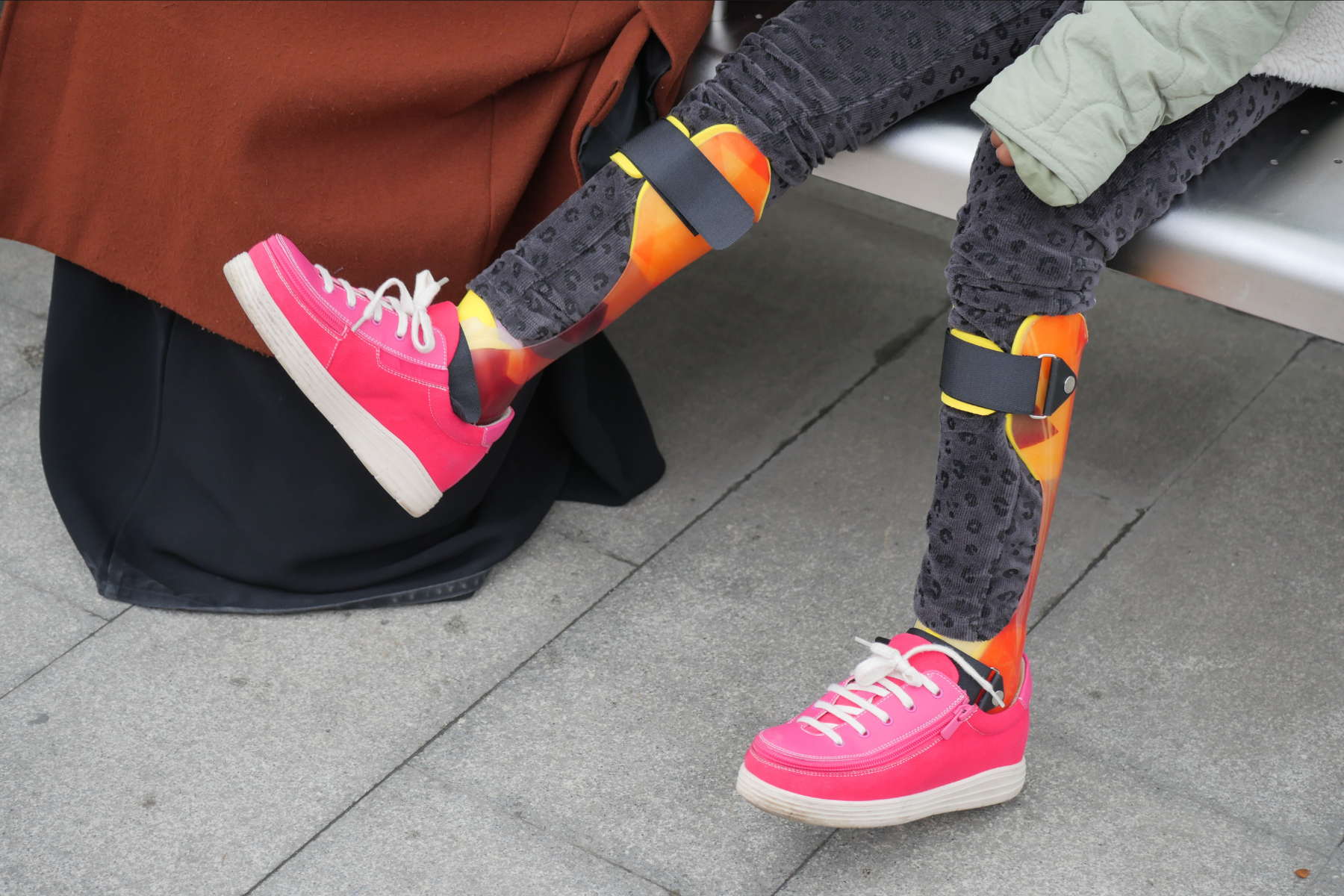
- Protective bracing (ankle-foot orthosis) to prevent stress fracture.
- Activity modification and monitoring for signs of pain or deformity.
- Bone health optimization with vitamin D and nutrition.
Once a fracture occurs or healing stalls, surgery is the only effective option.
Surgical Management
Dr. Hariharan’s reconstructive philosophy in NF1 combines stability, biologic stimulation, and
mechanical alignment.
Core principles include:
- Radical excision of fibrous pseudarthrosis tissue.
- Stable intramedullary fixation with rods or hybrid constructs.
- Autograft or allograft bone grafting, often augmented with BMP or bone
morphogenetic proteins to stimulate healing. - Cross-union technique (fusion of tibia and fibula) to increase long-term durability.
- Use of external fixation (Ilizarov or hexapod frames) when alignment correction or
length restoration is required.
Each surgery is planned meticulously to reduce recurrence; the greatest challenge in NF1
pseudarthrosis care.
Postoperative Care and Outcomes
Healing in NF1 takes time. Postoperative management includes:
- Weight-bearing protection for 3–6 months.
- Physical therapy to maintain joint mobility.
- Serial imaging to confirm bone union.
When reconstructed properly, children regain stable alignment and long-term walking ability.
Secondary deformities such as leg-length discrepancy can later be corrected through guided
growth or limb lengthening.
Dr. Hariharan’s Perspective
“Treating NF1 bone dysplasia is one of the most rewarding challenges in pediatric orthopedics. It
takes precision, creativity, and patience; but when union occurs, the results are life-changing.”
— Dr. Arun Hariharan
Consultation and Contact
If your child has Neurofibromatosis Type 1 with bone deformity or pseudarthrosis, you can learn
more or schedule a consultation with Dr. Arun Hariharan at the Paley Orthopedic & Spine
Institute in West Palm Beach, Florida.
Written by Dr. Arun Hariharan, Pediatric Spine Surgeon at the Paley Orthopedic & Spine
Institute in West Palm Beach, Florida. Dr. Hariharan specializes in complex spine and limb
reconstruction for rare conditions including Neurofibromatosis, Arthrogryposis, and
Skeletal Dysplasia.