Understanding Arthrogryposis and the Spine
Arthrogryposis Multiplex Congenita (AMC) is a group of conditions characterized by
multiple joint contractures present at birth. While the hands, feet, and limbs are often the most
visibly affected, the spine is frequently involved and managing spinal deformity in AMC
requires precision, patience, and long-term vision.
Children with AMC have decreased fetal movement (akinesia) during development, leading to
shortened muscles, stiff joints, and underdeveloped soft tissues. These same biomechanical
limitations extend to the spine, which can develop progressive deformities over time.
Dr. Arun Hariharan and his team at the Paley Orthopedic & Spine Institute are among the few
centers in the world experienced in treating complex spinal deformity in AMC, focusing on
maintaining function, preventing pain, and improving quality of life through carefully staged and
individualized care.
Why the Spine Is Affected in AMC
Spinal deformity in AMC arises from a combination of factors:
- Muscle imbalance between the anterior and posterior spine.
- Stiff joints and reduced flexibility, which increase mechanical stress on the spine.
- Growth asymmetry, leading to curvature or kyphosis as the child grows.
- Weak trunk musculature, making posture and sitting balance difficult.
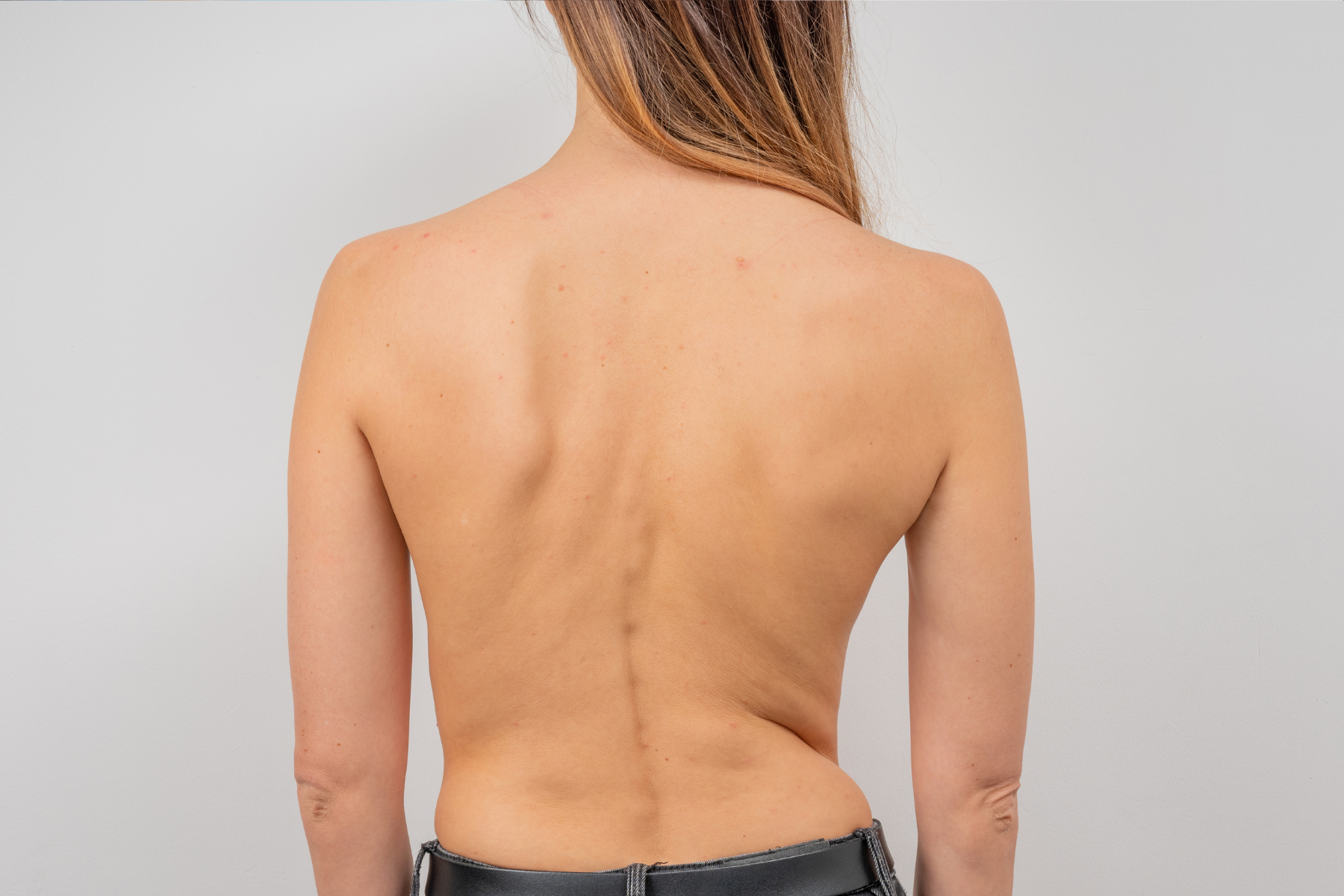
Unlike idiopathic scoliosis, spinal curves in AMC are often rigid, early in onset, and associated
with pelvic or thoracic imbalance.
Common Spine Patterns in Arthrogryposis
- Thoracolumbar Kyphosis:
Often severe and present early in life. Fixed kyphosis can interfere with sitting balance
and cause skin breakdown at the apex. - Scoliosis:
Progressive, stiff curves that may worsen during growth and require bracing or surgery. - Pelvic Obliquity:
Uneven pelvic alignment from asymmetric contractures or hip deformity can lead to
compensatory spinal tilt. - Cervical or Thoracic Extension Deformity:
Less common, but may occur in association with upper limb or shoulder contractures.
Evaluation and Diagnosis
At the Paley Institute, spine evaluation in AMC begins with a detailed understanding of the
child’s entire musculoskeletal system, not just the curve itself.
Comprehensive assessment includes:
- Physical exam focusing on range of motion, muscle tone, and compensatory posture.
- EOS imaging for low-dose full-spine analysis in sitting or standing.
- MRI to assess for spinal cord tethering, syrinx, or intraspinal abnormalities (seen more
often than previously recognized in AMC). - Functional analysis – evaluating sitting balance, gait (if ambulatory), and brace
tolerance.
Dr. Hariharan’s research has shown a high prevalence of tethered cord in children with
arthrogryposis, underscoring the importance of MRI screening before any surgical intervention.
Non-Surgical Management
In young children or those with mild deformity, early management focuses on mobility,
bracing, and therapy:
- Custom-molded spinal braces can help maintain alignment and posture, particularly
when curves are flexible. - Physical therapy strengthens trunk musculature and prevents compensatory postures.
- Seating modifications improve comfort and reduce pressure points for children with
poor trunk control.
Because spinal stiffness is common, non-surgical measures often delay, but do not always
prevent, the need for surgery. The goal is to preserve function and delay fusion until
absolutely necessary.
When Surgery Becomes Necessary
Surgery is indicated when spinal curves progress beyond 50–60 degrees, interfere with sitting
balance, cause pain or skin breakdown, or threaten respiratory function.
Surgical treatment in AMC is uniquely challenging because of:
- Rigid deformities resistant to traction.
- Short, hypoplastic pedicles.
- Thin, fibrotic soft tissue coverage.
- Frequent coexisting hip, knee, or shoulder contractures.
Dr. Hariharan’s surgical strategy prioritizes safety, stability, and sagittal balance, using the
least invasive method that achieves durable correction.
Dr. Hariharan’s Surgical Approach
At the Paley Institute, spinal deformity correction in AMC involves meticulous preoperative
planning and a combination of modern technologies:
- Navigation and O-arm 3D imaging for precise screw placement, even in dysplastic
pedicles. - Intraoperative neuromonitoring (MEP, SSEP, EMG) for real-time nerve protection.
- Osteotomies (bone cuts) for releasing rigid curves safely.
- Posterior spinal fusion with segmental instrumentation, often combined with
allograft bone and BMP to enhance fusion in compromised tissue. - Selective anterior release or tethering in flexible deformities to preserve motion.
In severe cases, the procedure may be staged; first correcting flexibility with traction or
anterior release, then performing definitive posterior fusion.
Every case is customized, balancing correction with soft tissue tolerance and long-term function.
Goals of Surgery
The aim is not to create a perfectly straight spine, but to achieve:
- Stable, balanced posture that supports sitting and breathing.
- Reduction of pain and pressure points.
- Improved brace or seating tolerance.
- Durable alignment that allows continued limb mobility and independence.
When done thoughtfully, surgical correction can dramatically improve comfort, quality of life,
and participation in daily activities.
Postoperative Care and Recovery
After surgery, care focuses on safe recovery and maintaining motion in unaffected joints. The
Paley team works closely with rehabilitation specialists to:
- Optimize seating and bracing.
- Begin early mobilization to prevent stiffness.
- Manage wound healing and nutrition.
- Transition back to home-based therapy programs.
Most children resume therapy within weeks and show notable improvement in comfort and
posture within months.
Dr. Hariharan’s Perspective
Dr. Arun Hariharan’s approach to AMC is built on years of research and surgical experience. He
understands that each child’s spine is part of a larger story; one involving limb deformities,
growth challenges, and family resilience.
His guiding philosophy:
1. Individualize every plan. No two AMC cases are the same.
2. Prioritize neurologic safety. Every correction is performed under continuous monitoring
and precise imaging.
3. Preserve motion and function whenever possible.
4. Collaborate deeply with families and therapists. Long-term success comes from
teamwork.
Looking Forward
Spine care in arthrogryposis has advanced dramatically. Modern technology and interdisciplinary
care have transformed what was once a nearly untreatable deformity into a manageable,
reconstructable condition.
Dr. Hariharan and his team continue to lead research on spinal cord anomalies and outcomes in
AMC, helping refine surgical strategies that maximize safety and results.
Consultation and Contact
If your child has arthrogryposis and a spinal deformity or posture concern, you can learn more
or schedule a consultation with Dr. Arun Hariharan at the Paley Orthopedic & Spine Institute in
West Palm Beach, Florida.
Written by Dr. Arun Hariharan, Pediatric Spine Surgeon at the Paley Orthopedic & Spine
Institute in West Palm Beach, Florida. Dr. Hariharan specializes in complex spinal
deformities and rare conditions such as arthrogryposis, skeletal dysplasia, and cerebral
palsy, providing advanced, compassionate care for children worldwide.