Scoliosis is one of the most common spinal conditions affecting children and adolescents, yet it’s frequently missed until the curve has already progressed. If you’re a parent wondering whether your child’s uneven shoulders or crooked posture is something to worry about, this guide breaks it down clearly.
What Is Scoliosis?
Scoliosis is an abnormal sideways curvature of the spine, typically appearing as a C or S shape on an X-ray. It’s not just a cosmetic issue, when left undetected and untreated, significant curves can affect posture, lung development, and quality of life.
Any spinal curve greater than 10 degrees is defined as scoliosis. Curves under 10 degrees are considered postural asymmetry and are not true scoliosis. Scoliosis affects roughly 2–3% of the U.S. population, approximately 7 million people, and is more common in girls than boys. Most cases are diagnosed between ages 10 and 18.
Types of Scoliosis in Children
Not all scoliosis is the same. The three main types seen in pediatric patients are:
- Adolescent Idiopathic Scoliosis (AIS) — The most common form, diagnosed between ages 10–18. ‘Idiopathic’ means no single identifiable cause, though genetics likely play a role. Approximately 30% of AIS patients have a family history of the condition.
- Juvenile Idiopathic Scoliosis — Diagnosed between ages 4–9. This type carries a higher risk of progression and warrants close monitoring.
- Congenital and Neuromuscular Scoliosis — Caused by abnormal vertebral formation before birth, or secondary to conditions like cerebral palsy, spinal muscular atrophy (SMA), or muscular dystrophy. These cases often require earlier, more complex intervention.
Signs and Symptoms of Scoliosis to Watch For
Scoliosis is usually painless, which is exactly what makes it easy to miss. Parents often notice subtle asymmetries before anyone else does.
Key warning signs include:
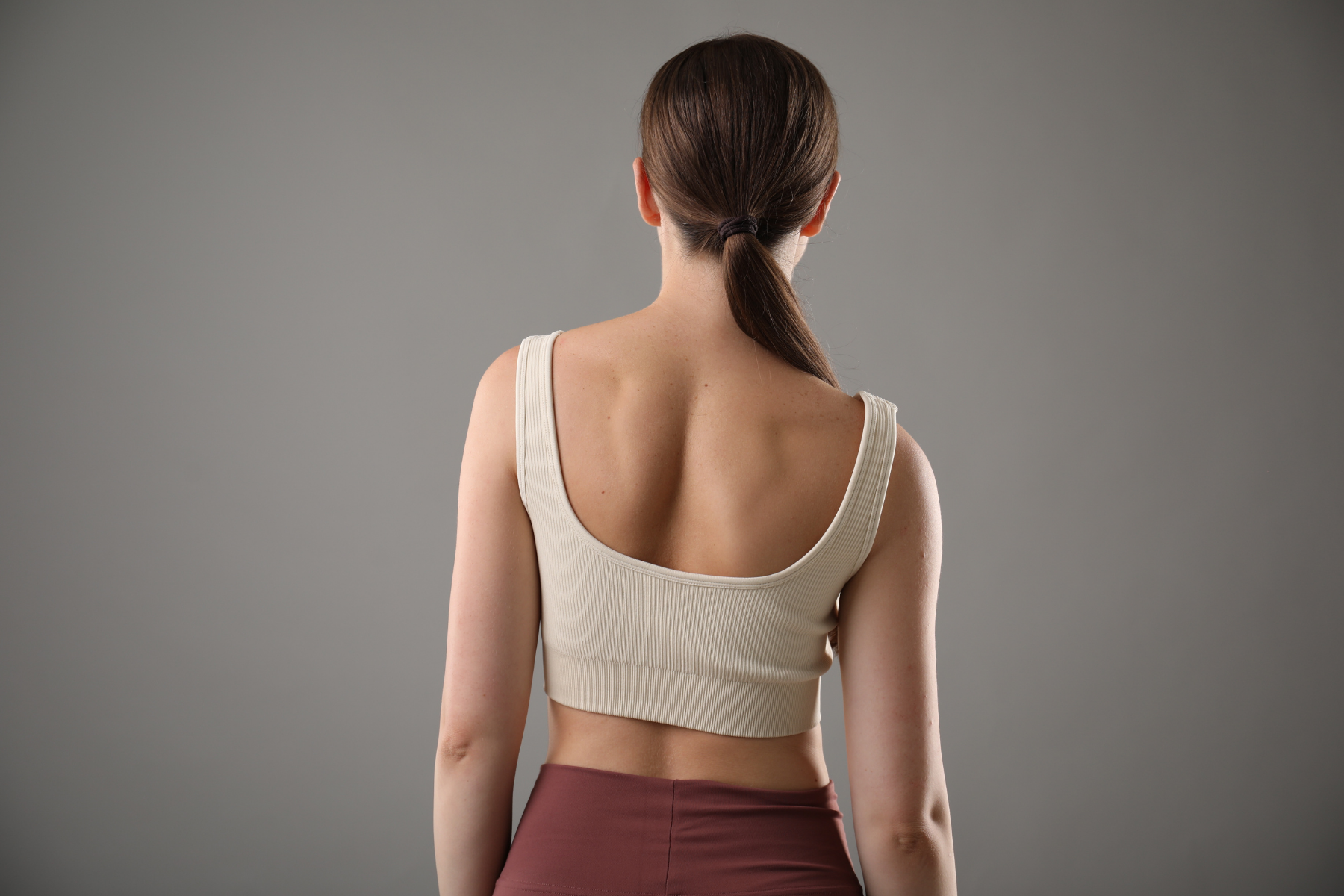
- Uneven shoulders — one sits noticeably higher than the other
- Prominent shoulder blade — one scapula sticks out more than the other
- Uneven waistline or hips — one hip appears elevated, making pants hang unevenly
- Rib hump — a visible prominence on one side of the back when your child bends forward; caused by the rotational component of scoliosis and often the most visible sign
- Head not centered over the pelvis when standing
- Clothing that doesn’t hang straight — shirts, dresses, or pant legs sitting unevenly
Small curves often go unnoticed until a child hits a growth spurt during puberty, which is when the curve can worsen rapidly. This is why routine screening during the pre-teen years is so important.
Does Scoliosis Cause Pain?
In most children, mild to moderate scoliosis does not cause significant pain. When scoliosis begins in adolescence, patients may report some lower back discomfort, though spinal curvature is generally not considered the primary cause of back pain in most adolescent patients. Pain is more common in neuromuscular scoliosis, very large curves, or in adult patients with degenerative changes. If your child is reporting significant back or leg pain alongside a visible spinal asymmetry, that warrants prompt evaluation.
The Adam’s Forward Bend Test
This is the standard screening test used by pediatricians and school nurses. Your child bends forward at the waist with knees straight and arms hanging free. The examiner observes the back to check for a rib hump or trunk asymmetry, which can indicate underlying spinal curvature.
It’s a good screening tool, but it’s not a diagnosis. A positive screen should be followed by evaluation with a pediatric spine specialist and standing full-length spinal X-rays.
How Is Scoliosis Diagnosed?
Diagnosis requires a standing full-length spine X-ray. The Cobb angle, the gold standard measurement, quantifies the degree of curvature. Your spine surgeon will assess curve magnitude (in degrees), curve location (thoracic, lumbar, or both), skeletal maturity (how much growth remains), and curve pattern and flexibility. These factors together determine whether your child needs observation, bracing, or surgery.
When Should You Seek Help?
Don’t wait for a school screening. See a pediatric spine specialist if you notice visibly uneven shoulders or hips, a rib hump when your child bends forward, clothing that consistently hangs asymmetrically, or a family history of scoliosis in a female adolescent during a growth spurt.
Early diagnosis matters, if scoliosis is caught before a major growth spurt, there’s often an opportunity to use bracing to prevent the curve from worsening. The window for the most effective non-surgical intervention is narrow, and it closes as skeletal maturity approaches.
The Bottom Line
Scoliosis is common, treatable, and when caught early it can be very manageable. Most children with scoliosis never need surgery. But the children who benefit most from treatment are the ones who are diagnosed early, monitored carefully, and managed by a specialist with deep experience in pediatric spinal deformity. If something looks off, trust your instincts. A single visit to a pediatric spine surgeon can give you clarity, a plan, and peace of mind.
Dr. Arun Ramaswamy Hariharan is a pediatric spine surgeon at the Paley Institute at St. Mary’s Medical Center in West Palm Beach, FL, specializing in adolescent idiopathic scoliosis, early onset scoliosis, and complex spinal deformity. To schedule a consultation, visit scolisurgeon.com.